

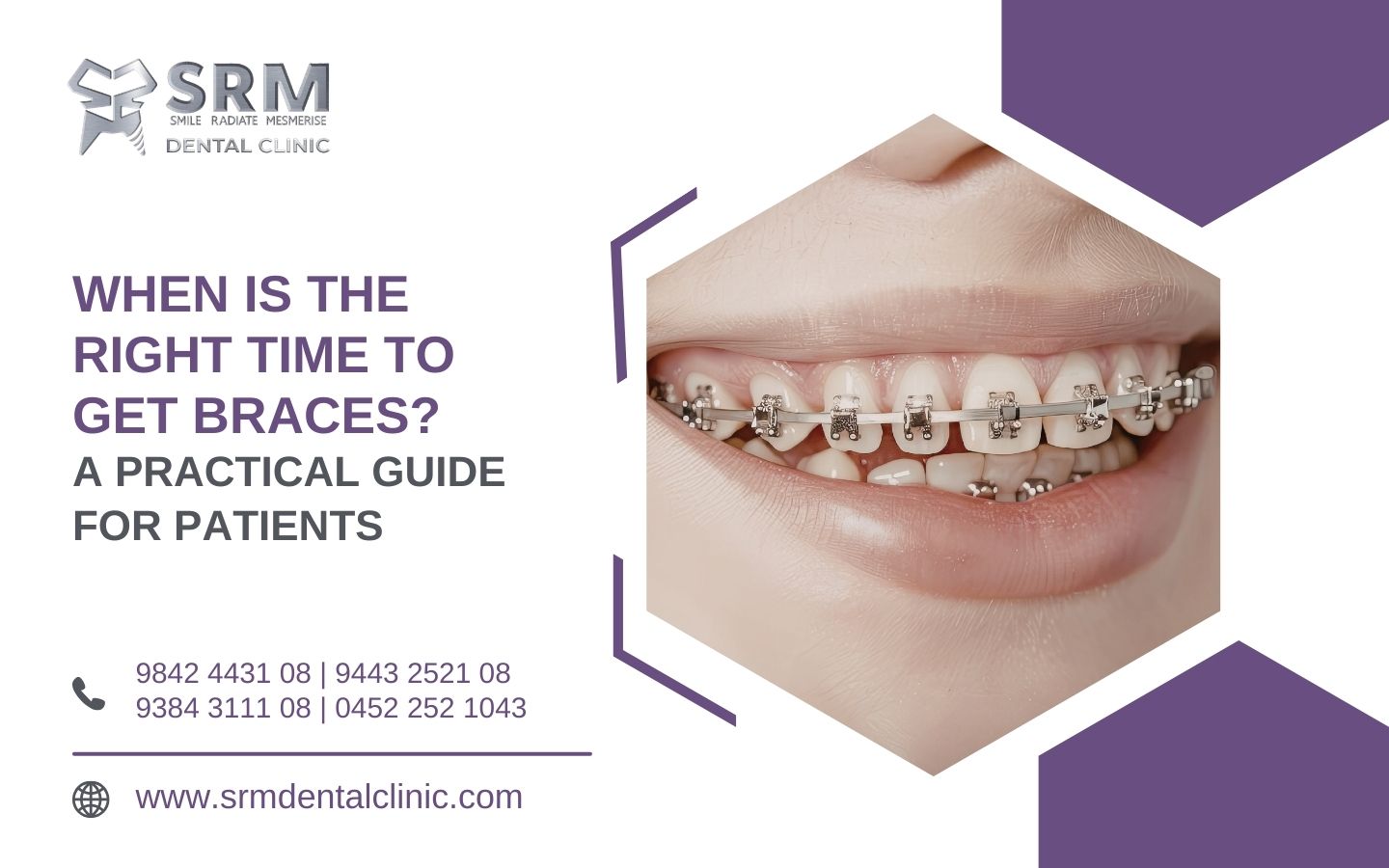
A smile does not always grow the way we imagine it will. Sometimes the teeth overlap slightly. Sometimes a few of them push forward while others hide behind. For some people, it becomes noticeable during their teenage years. For others, the change becomes clear only when looking at photos or feeling food getting trapped between crowded teeth.
Situations like these often lead people to explore orthodontic care. Straightening teeth is not only about appearance. Alignment also influences how comfortably we chew, how easily we clean our teeth, and how balanced the bite feels over time.
At SRM Dental Clinic, conversations around orthodontic care usually begin when someone starts noticing these small changes in their smile. That is when questions about options such as braces treatment in Madurai begin to come up. With the right guidance and a carefully planned approach, braces can gradually guide teeth into positions that support both oral health and confidence.
Why Teeth Become Crooked in the First Place
Teeth do not shift randomly. Several factors influence how they grow and position themselves within the jaw.
Some of the common reasons we observe include:
- Jaw size differences that leave limited space for teeth
- Early loss of baby teeth causes neighboring teeth to drift
- Habits such as thumb sucking during childhood
- Genetics that influence tooth size and alignment
When these factors combine, teeth may begin to crowd, tilt, or rotate slightly. Over time, the bite can also become uneven.
Crowded teeth are not only a cosmetic concern. When teeth overlap, cleaning between them becomes difficult. Plaque buildup increases, which may eventually lead to cavities or gum irritation.
Orthodontic care helps correct these issues by gradually guiding teeth into healthier positions.
Signs That Orthodontic Care May Be Helpful
Patients sometimes wait until alignment issues become very obvious before considering treatment. In reality, several early signs can indicate that orthodontic guidance may help.
During consultations, we often look for concerns such as:
- Teeth that overlap or appear crowded
- Large gaps between teeth
- Difficulty biting or chewing comfortably
- Jaw discomfort during eating
- Teeth that appear tilted or rotated
Even mild alignment concerns can benefit from early evaluation. When teeth are guided gradually, the process often becomes smoother and more predictable.
Many families exploring braces treatment in Madurai come to us simply for an opinion. That initial consultation helps us understand the bite and determine whether treatment would be beneficial.
Habits in Childhood That Can Affect Teeth Alignment
Sometimes crooked teeth are not only about genetics. Certain habits during childhood can slowly influence how teeth and jaws develop. Many parents are unaware that everyday behaviors can shape the way a smile grows.
Some habits we often observe include:
- Thumb sucking that continues beyond early childhood
- Constant use of pacifiers for a long period
- Mouth breathing instead of nasal breathing
- Tongue pushing against the front teeth while swallowing
When these habits continue for several years, they can affect the position of teeth or the development of the jaw. For example, thumb sucking may push the front teeth forward, while tongue thrusting can create spacing between teeth.
Early orthodontic evaluation helps us identify these patterns and guide families toward corrective steps. In many cases, addressing the habit early can reduce the complexity of orthodontic treatment later.
Why Timing Matters for Braces
One question we hear frequently is whether there is a perfect age for braces. The answer depends on the individual patient.
Children often benefit from early orthodontic evaluation because their jaws are still developing. Guiding teeth during growth allows us to use natural changes in the jaw to our advantage.
However, adults can also receive excellent results with braces. Teeth continue to respond to gentle pressure throughout life.
Orthodontic care is commonly recommended during:
- Late childhood when permanent teeth begin appearing
- Teenage years when jaw growth supports alignment changes
- Adulthood for patients seeking cosmetic or functional improvement
The key factor is not age but the condition of the teeth and surrounding bone.
How Braces Gradually Move Teeth
Many patients wonder how braces are able to reposition teeth that have been in the same place for years.
The process works through gentle and continuous pressure. Braces use brackets and wires to guide teeth slowly into their ideal positions. The surrounding bone adapts gradually as the teeth move.
Treatment usually involves several stages:
- Attaching small brackets to the teeth
- Connecting them with a thin orthodontic wire
- Adjusting the wire periodically to guide movement
Each adjustment encourages teeth to move slightly closer to their desired alignment.
Because this process happens gradually, the surrounding bone and gums adapt comfortably.
Different Options for Straightening Teeth
Orthodontic care has evolved significantly over the years. Patients now have several options depending on their lifestyle and preferences.
Common orthodontic solutions include:
Traditional metal braces
- Strong and reliable for complex alignment issues
- Suitable for both children and adults
Ceramic braces
- Similar to metal braces but less noticeable
- Blend with the natural color of teeth
- Transparent removable trays
- Popular among adults seeking discreet treatment
During consultations, we discuss the advantages of each option so patients can choose the one that fits their routine.
For many individuals considering braces treatment in Madurai, understanding these choices makes the process less intimidating.
Everyday Life With Braces
Patients often worry about how braces might affect their daily routine. While some adjustments are necessary, most people adapt quickly.
A few simple habits help maintain comfort and oral hygiene during treatment.
Helpful practices include:
- Brushing carefully around brackets after meals
- Using orthodontic brushes or floss threaders
- Avoiding very sticky or hard foods
Regular visits allow us to adjust the braces and ensure the teeth are moving as planned.
Many patients are pleasantly surprised at how quickly braces become a normal part of their routine.
The Role of Retainers After Treatment
Once the teeth reach their new positions, retainers help maintain the results. Teeth have a natural tendency to shift slightly over time.
Retainers support long-term stability by holding the teeth in place while surrounding tissues adapt.
Patients usually receive guidance on how to wear and care for their retainers.
Typical recommendations include:
- Wearing retainers as instructed by the orthodontist
- Cleaning them regularly to prevent buildup
- Storing them safely when not in use
Following these steps helps preserve the alignment achieved during treatment.
The Confidence That Comes With Aligned Teeth
Orthodontic treatment often improves more than appearance. Many patients notice functional improvements as well.
When teeth align properly, patients often experience:
- Easier cleaning between teeth
- Improved chewing comfort
- Reduced strain on jaw muscles
Over time, these benefits support overall oral health.
One of the most rewarding moments in orthodontic care happens when patients see their final smile after months of gradual progress.
At SRM Dental Clinic, guiding patients through this transformation is one of the most fulfilling parts of our work. For many individuals exploring braces treatment in Madurai, the journey begins with curiosity and ends with a healthier, more confident smile that continues to serve them well for years to come.