

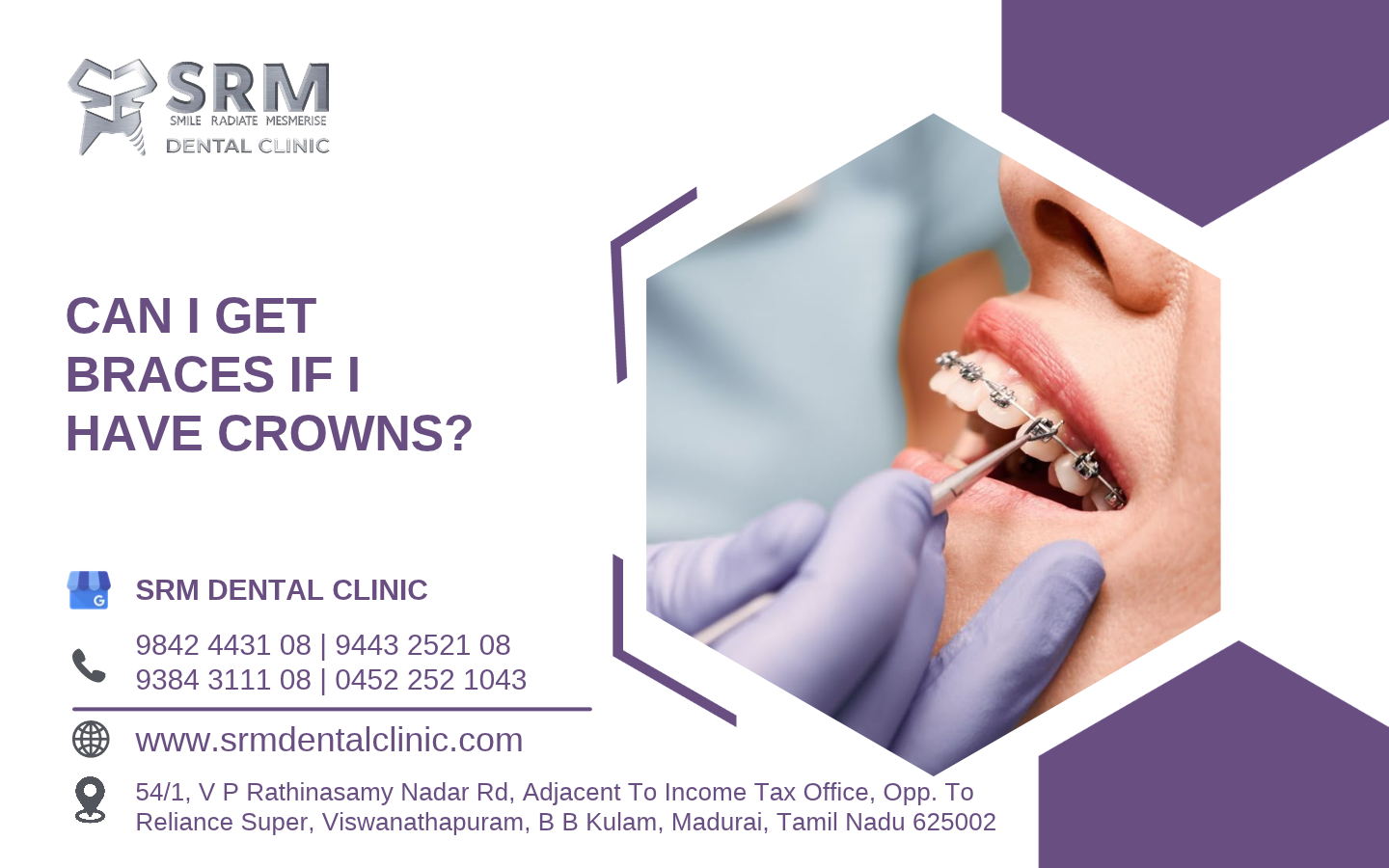
Braces treatment can be possible if you have crowns, but the approach depends on the condition of your crowned teeth and your overall dental health. Having a crown does not automatically rule out orthodontic treatment, but it does require careful planning.
What Should Be Considered?
1. Condition of the Crown
Healthy Crown: A properly fitted and stable crown can often be included in an orthodontic plan.
Damaged Crown: Loose, cracked, or poorly fitting crowns may need attention before braces.
2. Tooth & Gum Health
The natural tooth beneath the crown and the surrounding gums need to have adequate support before orthodontic movement begins.
3. How Braces Attach
Orthodontic brackets can be bonded to some crown surfaces, but the bonding method may differ from that used on natural enamel.
4. Type of Tooth Movement
The orthodontist will assess whether the crowned tooth needs to move and how that movement may affect the surrounding teeth and bite.
5. Existing Dental Work
Fillings, bridges, implants, or multiple crowns can influence the overall treatment plan and may require coordination with restorative dental care.
At SRM Dental Clinic, Dr. R. Meyyappan can assess your crowns, teeth, gums, and bite before planning braces treatment suited to your orthodontic needs.
Have crowns and considering braces? Book a consultation at SRM Dental Clinic to understand your treatment options.
📍 NAP Details:
#bracestreatment #bracescare #orthodontics #dentalcrowns #smilecare